A pregnant pause

A quick search on Google produces various definitions of this familiar idiom. My favourite is:

A pause that gives the impression that it will be followed by something significant.  (www.en.wiktionary.org)


I am now 15 weeks pregnant and I paused for nine of these. I’m now coming out of the other side and safely into my second trimester.

During my nine-week pause, I didn’t teach a yoga class. Making it into London for my freelance work felt less like a step too far and more like an entire staircase out of reach.

My world shrank. On a good day, I had the energy to make cheese on toast and who knew it was possible to throw up so unexpectedly and forcefully!

I found myself sharing the contents of my stomach with a motorway hard shoulder and then refuelling at a service station with an emergency Nando’s.

When I told this to a friend and yoga student, she said how she’d thought she’d be doing a modified ashtanga practice and drinking green juice during her pregnancies. Instead, she found herself lying on the floor eating peanut butter on white bread and bags of crisps.

And the changes your body goes through! In the very early days, I had such intense muscular sensations across the sacrum and back of pelvis, I could feel everything stretching and moving to make space for what was to happen over the coming months. The only thing that helped was child’s pose with a hot water bottle across the area.

At ten weeks I looked pregnant and I’ve been told that my ever-expanding boobs are now the temperature of the sun – by my fiancé, Rob, I hasten to add.

Although anything more than child’s pose and the occasional cat/cow eluded me for the length of my pause, the lessons of yoga were ever-present. Never before had listening to my body been quite so important. If I tried to get out of bed before 10am, I was sent running to the toilet, head over bowl, and then straight back under the duvet and my ginger oatcakes.

I concentrated on my breath when any pregnancy fears rose to the surface and the ‘what ifs’ threatened to take over.

I had to accept what was possible for me on that day as there was absolutely nothing I could do about it. This beautiful little being inside me has been totally running the show, gradually making its way through bigger and bigger fruit-based size comparisons (‘this week, your baby is the size of an avocado’).

In the ancient teachings of the Bhagavad Gita, on a battlefield, Krishna teaches Arjuna to do his duty. He’s a warrior facing a battle that doesn’t appeal. My duty right now is to do what’s best for our baby. And that has nothing to do with trying to advance through advanced ashtanga poses.

Now I’m able to leave the house more, I am appreciating the little things. I’ve made it to a yoga class and enjoyed being back amongst familiar faces. Just being able to move with my breath in a sun salutation has been an utter delight.

“The practice helps me to process things in life more effectively; that is important, as during pregnancy and the aftermath there is a lot for us, as mothers to process. The changes in our bodies – the hormones alone – can alter our perceptions and experience of life enormously.


… We are all so lucky to have this practice as a central and stable resource, bringing awareness and light into our lives and into our being.”


Lucy Crawford, taken from Yoga Sadhana for Mothers.


I am so grateful to Celia, Louise, Niki and Sam for covering my weekly classes. I’d also like to say thank you to my regular students who’ve known I’ve been pregnant for what feels like ages! All your emails and texts of support and congratulations have meant so much.

I will be back teaching from Monday 8 August. View the classes schedule to see what’s going on with classes during the summer.

In light of being in bed by about 9pm every night, I have decided to give up my Thursday evening yin class at The Yoga Hall, St Albans. It hasn’t been an easy decision and I thank all of you who have attended the class over the years. I have enjoyed our after-class natters over tea and fig rolls. I hope to see you soon and keep up the practice.

If you’d like to get an extra dose of yin, ashtanga or gentle yoga, Cathy and I have places on our October retreat near Bedford. View details.
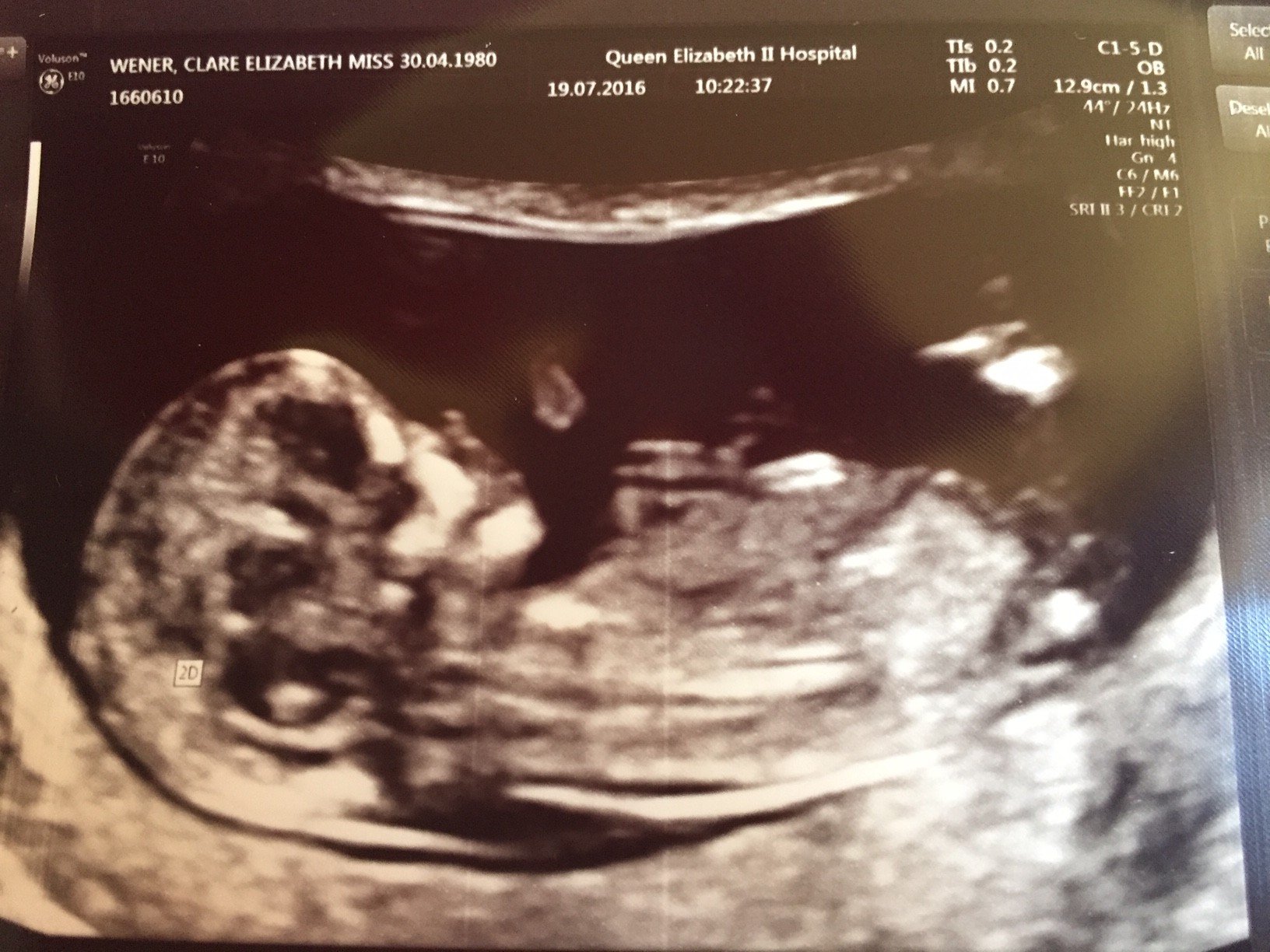
baby scan pic

Indian tales: The highs and lows of Goa yoga

Earlier today I had my last yoga practice in Goa. I was on the roof of a one-storey building – the kitchen for the beach huts where we’re staying. As I went through my standing postures, an old bloke was shimmying up the surrounding coconut palms, sending ripe coconuts crashing to the earth below. I faced the ocean and breathed with the waves.

Tomorrow we leave Goa and head to Mumbai for two nights before flying home to London. I’ve been thinking about the yoga I’ve practiced over the last two weeks. Here are some things I’ve learnt and perhaps you’ll find them useful too.

Drop-in classes: a mixed bag

You just really don’t know what you’re in for. On Christmas Day morning I went to a led Ashtanga class with an Indian guy called Deepak. His adjustments were a little unconventional (verging on dangerous) and I felt my body tense whenever he moved near me. He was as bendy as the bendiest bendy thing and didn’t seem to show much empathy for Westerners in their first ever yoga class.

Other classes were lovely but just going to one class then trying a different class the next day doesn’t allow a student/teacher relationship to develop. Consistency is key.

Immersion is good

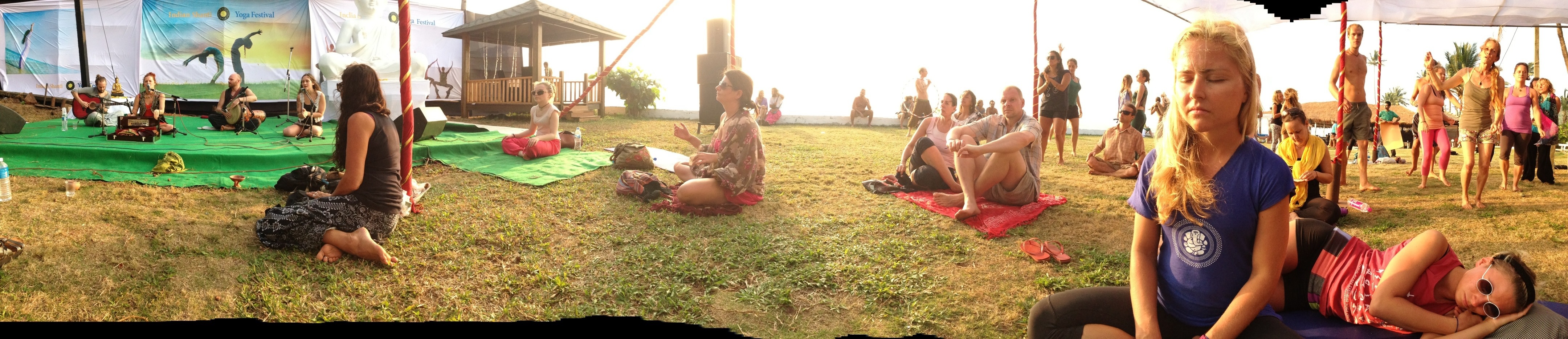
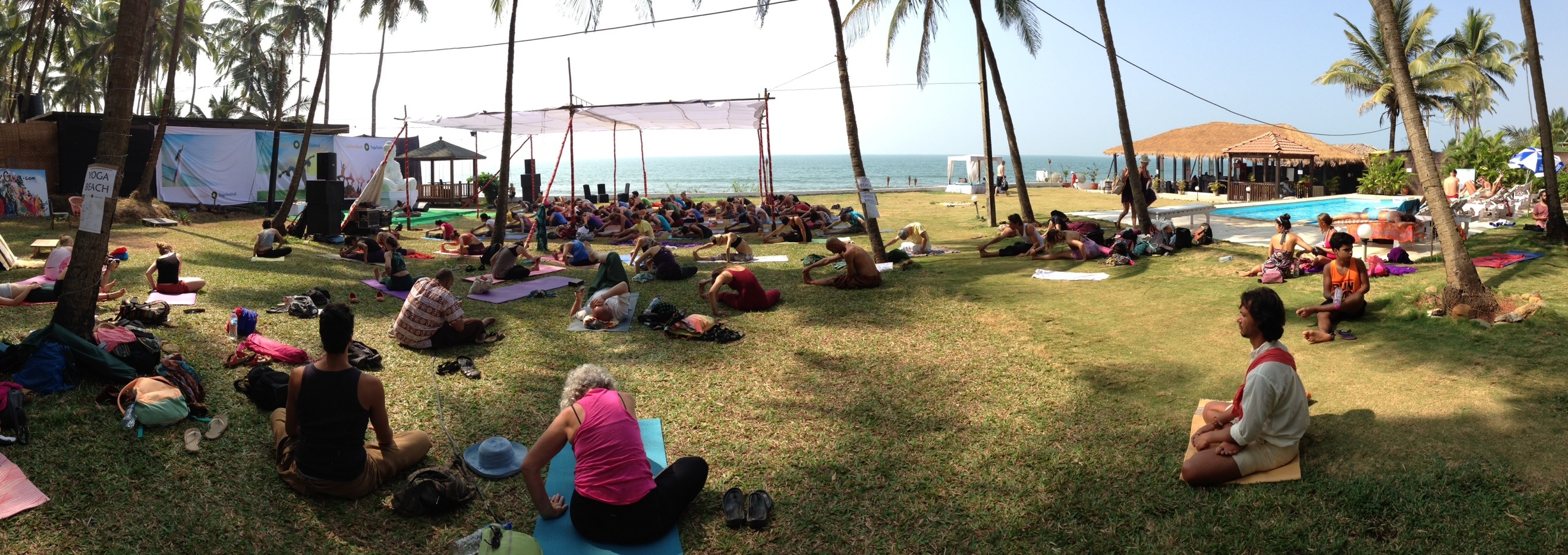
Katharine and I stumbled upon the Indian Shanti Yoga Festival and it became one of the highlights. At a plush beach resort in Ashwem, we spent three days surrounded by yoga addicts and a schedule that ran from 8am to 10pm… all for £25.

I reconnected with Sivananda yoga through classes with Nataraj, the Director of the ashram in Kerala where I’ve spent time previously. Witnessing him in his baggy Sivananda yellow t-shirt and white trousers just made me feel so happy. He looked a bit at odds with girls wearing tiny lycra shorts but the atmosphere was very welcoming and inclusive.

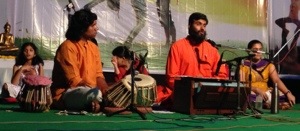
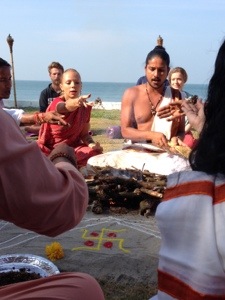
There was a lot of bhakti (devotional practices). The festival opened with a homa (fire ceremony) to Lord Ganesha. We all offered something to the fire – something we wanted to cast aside for 2014. Swamis from various Indian ashrams taught classes and led the chanting of Sanskrit bhajans.

20140108-060116.jpg
(Anand led the Ganesha homa.)

20140108-054020.jpg
(Swami Sugoshananda: “Everything happens as planned and it is for our own good.”)

I also went to a Bhagavad Gita talk, taught by an elderly New Yorker with a huge white beard, long hair and piercing blue eyes. He reeled off the slokas (verses) in Sanskrit. Hearing the words of Krishna to Arjuna with his accent: “Hey Arjuna, so you gotta fight people you care about. But you just gotta do your duty!”

20140108-053311.jpg

20140108-053352.jpg

Acroyoga is awesome

Acroyoga founder, Jason Nemer, taught at the festival.

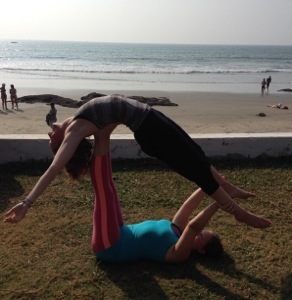
With one person being the base, another the flyer, and another the spotter, we did some therapeutic flying. We practiced giving each other massages in ‘folded leaf’ and worked on backbends suspended in the air in ‘high flying whale’. We did handstands holding onto the backs of your partner’s ankles while they were in a high plank.

20140108-054029.jpg
(Me being a high flying whale.)

I like the philosophy behind the practice. It’s about building trust and confidence through letting go. The flyer has to resist any urge to control and you are totally in the hands (and feet) of your base. It’s playful, fosters closeness and you learn a lot about your partner. The sessions open and close with kirtan – chanting in a circle, developing togetherness.

Jason will be teaching five days of acroyoga at Triyoga in London later this year.

The final day included four hours of Thai Yoga Massage run by the acroyogis. Thai massage is seen to be a complementary practice to the more acrobatic side. I like this. It’s the yin and yang idea. The massage is the yin (calming, cooling, slow, soft) and the acroyoga is more dynamic, energising and fast-paced.

Summing up

Some of my most enjoyable yoga moments have been my self practices but I’m also looking forward to going home and getting back to classes – both teaching and being a student.

I know this trip has been about relaxing, spending time with my sister and also doing some yoga, but if I were to return to India for yoga, I’d do a period of study with someone who can help develop my practice. I’ve got my eye on David Garrigues’ intensive in Kerala in 2015, a trip to Mysore or even a retreat with David Keil at Purple Valley in Anjuna.

That’s the joy of yoga. There’s always more to learn and India is always calling.

Classes start back in London and Hertfordshire from 12 January and the first yin/yang workshop at Breathing Space in Harpenden will be on 18 January. My first BAYoga Studio yin workshop is on 1 February.

Happy new year everyone.

Om shanti.

Teacher training: Stumpy thumbs and yoga… NEW RESEARCH!!

thumbnail of our thumbnailsI am delighted to introduce a co-contributor, Laurie Brockhaus, for this very special and exclusive blog post. Laurie and I have recently made some yoga discoveries. Here we provide you with our ground-breaking research findings.

Last week on our teacher training course we were blessed to spend five days with Carlos Pomeda. We learnt about texts and learnings that are essential to yoga including the Bhagavad Gita and the Upanishads. Carlos shared some of the folk stories from the ‘Mahabarata’ or ‘The great story of India’.

He also talked us through the Hatha Yoga Pradipika – an important text that mentions the term ‘asana’ meaning a seated meditation posture, and ‘mudras’. Mudras are energy locks in the body and traditionally refer to mula bandha (a tightening of the pelvic floor), uddiyana bandha (a lock in the thoracic back), and jalandara bandha (chin lock). However, more generally, a mudra can be described as a gesture that often involves the hands and fingers.

Through further in-depth research, we have discovered a new mudra, known simply as thummudra. The mudra is characterised by bringing the four fingers in towards the palm and strongly engaging the thumb in an upward fashion. It is used by people with toe thumbs or Brachydactyly type D and draws more prominence to the feature. Thummudra helps toe-thumbed individuals draw more prana (vital energy) into the body and harness their personal power.

Below you will find a series of images showing how the mudra can be incorporated into a range of classical asanas. You will also find further information on the Indian folk legend that inspired the mudra.

Use of thummudra in asanas

Navasana (boat pose) gains more buoyancy with thummudra
Extend strongly through heels and toe thumbs in Upavistha Konasana (wide-angle seated forward bend)
In the standard version of Utthita Hasta Padangustasana (extended hand-to-big-toe pose), the drishti (gaze) is to the big toe. When thummudra is incorporated, the drishti is to the toe thumb.
Thummudra increases the fierceness of Warrior II
A wider thumb in a wide-legged forward fold (Prasarita Padottanasana)
Simple seated meditation incorporating thummudra


Thumbvritta and her thousand stumpy thumbs

Here is the Indian legend that inspired the thummudra. As with many old Indian folk stories, its exact date of origin is unknown but it was probably being told around the same time that Shakespeare was writing in England.

The beautiful and clever Thumbvritta was well known in her Indian village for being the child who spent her days imagining and writing brilliant stories that entertained her family, friends and neighbours. As she grew up, she wanted nothing more than to pursue her love of writing by dedicating her life to studying with talented storywriting elders in the village.

Alas, perhaps due to an accumulation of bad karma in a previous life (or just the tradition of the time), at the age of 16 she was forced into an arranged marriage and had to accept her fate of service to her new husband’s family. This severely diminished Thumbvritta’s time for writing due to all the chores her evil tyrant mother-in-law expected her to do. She was always the first up in the morning and spent her days chopping, scrubbing, washing… her work was never done.

But she could not suppress her urge to write. Late at night, she would sneak from her husband’s bed and steal away to a small dark corner of the kitchen to draft her brilliant stories by ghee candlelight. One night, having grown quite exhausted from her chores, she fell asleep with biro in hand (yes, India has always been ahead of the game regarding writing implements). Early next morning, her demanding mother-in-law was shocked to discover her sleeping, rather than preparing the lentil dhal.

In a fit of rage she picked up a heavy iron pan and slammed it down on Thumbvritta’s right thumb. Thumbvritta screamed in pain and ran away from her husband’s home, determined to never go back. She ran the entire day until she finally collapsed in exhaustion alongside the sacred Ganga river. She allowed her throbbing thumb to rest in the cool water and feared that her thumb’s misshapen form would prevent her from writing. The healing waters of Ganga Ma stroked her injured thumb throughout the night and into the morning.

Thumbvritta awoke to find that not only was she no longer in pain, but she had grown a thousand (stumpy) thumbs, each glowing with the golden light of thousands of unwritten stories.

To this day, despairing people from all over the world visit the site on the Ganges where Thumbvritta grew her thousand thumbs. They wish to gain inspiration in finding a new path and to realise that personal power comes in unexpected forms. They also wish they had stumpy thumbs. Clare and Laurie are really lucky to have them.

Disclaimer: Please contact Laurie and Clare directly for academic references (we’ll cobble some guff together and send it to you).

Read Clare’s previous post about when she and Laurie realised they both had stumpy thumbs.