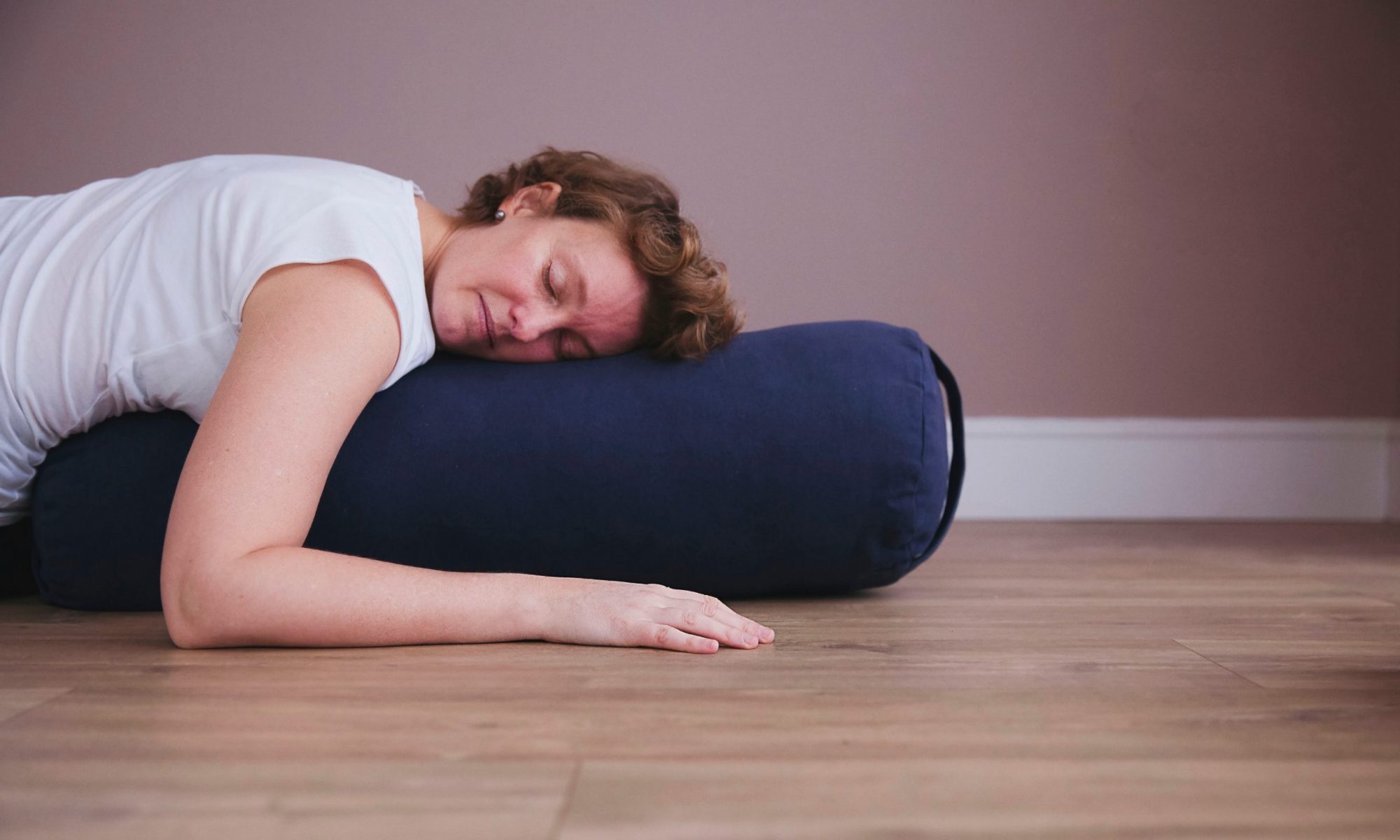
 Yin yoga is an excellent practice for many types of people – from those who struggle to find time to do anything, to those who run, cycle and do more active types of fitness. We all need to take time to be still, quiet and more contemplative. Yin yoga provides this.
Here are six reasons why yin yoga is great companion to sport and fitness:
1. Stretching to create space
Most people know that having a stretch before and after exercise is good. A freer range of movement allows the body to find the most efficient path and use less energy.
When we sit or lie in a yin pose, we create space in our bodies, in our minds, and in our day-to-day lives. On a physical level, the connective tissue surrounding our joints starts to become more malleable, improving our flexibility.
Reggie Ray covers this aspect nicely:
When you ask someone to sit down and be with themselves they go, “I can’t. I don’t have time for that.” Now you and I may realize that there actually is a problem. Most people don’t think there is a problem.
We run our kids in the same way—and it’s destroying them. The soccer practice and the music lesson and three hours of TV and homework—it goes on from the minute they get up until they go to sleep. They never have an opportunity to experience silence. Psychological development requires periods of solitude.
Anthropological psychology—studying other cultures, as well as our own—shows that when children do not have completely unstructured time, when there are no parental expectations looming over them, they actually can’t develop normally.
Read the Reggie Ray full article.
2. Injury prevention
Most injuries are from overuse. Imbalances in your body can cause inflammation and excessive wear on tissue. A regular yoga practice brings your body back into symmetrical alignment and corrects flexibility and strength imbalances.
You’ll be able to do sport or exercise for longer. Ryan Giggs credits yoga for the longevity of his football career.
 3. Yin vs yang
You may have heard of the terms ‘yin’ and ‘yang’ from Chinese Taoist thinking. Yang is about movement, creating energy and heat in the body. Yin is about finding stillness, being calm and cooling the body. HIIT sessions, running and cycling are all yang activity. Focusing just on the yang can lead to fatigue and burn out.
Having both allows the body to come into balance and stay in optimum condition.
4. The power of the breath
People think that yoga is about contorting the body but it’s actually a breathing practice.
Your breath provides you with energy and power to carry on and reach the finish line. Yoga teacher Donna Farhi explains all:
Doctor and triathlete John Hellemans recommends that the best breathing for top athletic performance is deep diaphragmatic breathing… Dr Hellemans also notes the importance of getting into a rhythmic flow with your breathing and synchronizing your breathing with your movement.
You can do that by taking a breath when you plant your foot during a stride or when pedalling on a cycle. Find a rhythm and speed of movement that allows you to work within the confines of your breath capacity so that you are not building up an oxygen deficit.
Donna Farhi, The Breathing Book
5. Staying power
In yin yoga we spend around five minutes in each pose (all are seated or lying down). This builds mental stamina. I’ve heard a yin practice being compared to a marathon.
This stillness allows us to become more in tune with our body, and naturally you’ll find that you start to watch your mind. We notice our thoughts – whether they’re positive or negative, linked to the past or the future, and whether they’re recurring. It allows us to connect within.
6. Accepting rather than competing
Yoga teaches that there’s more to life than going faster or further. It’s about accepting where you are today – not comparing yourself to before you had that hip/knee replacement, or thinking about how much fitter you were ten years ago. If we’re able to accept our bodies as they are today, we’ll be happier individuals.
And over the duration of a yin pose, your body will open and you’ll naturally go deeper. No pushing, no judgement, just accepting.
You can now practice a 25 minute yin class with me on YouTube as part of Fluxus Fitness’ Great in 8.
