
Teacher interview: Norman Blair

Norman Blair is one of the UK’s leading yin yoga teachers and has been teaching in London for over ten years. His monthly yin workshops at Globe House in Bermondsey are wonderful and leave you floating for at least three days after you leave the building (speaking from personal experience).

Norman kindly took the time to answer some questions.

CW: Tell me about your first yoga class.

NB: My first class was at Bodywise East London and a friend took me as she thought it would be good for me. I don’t really remember much about the class but what I do remember is that my friend, who I’m still in touch with, thinks it’s funny that I now teach yoga. She says that she’d never seen anyone as stiff or uncoordinated as me. There I was then… and here I am now!

I know there’s teachers who come from a place where they’re naturally really gifted in their bodies, but I really wasn’t one of them. It can be an asset to experience stiffness, a lack of coordination, difficulty with body parts and injuries. It allows you to see how much potential there is for change.

I went to those classes in East London for a bit, and then in 1993 a friend of mine called Oz was doing an Iyengar teacher training and needed her own group. I volunteered and over the next five years we’d meet in her living room on a regular basis.

Oz then went to Crete in 1995 to spend time with Radha and Pierre – John Scott’s teachers – and came back with an ashtanga practice. I remember sitting in her living room while she did a demo of the primary series. It was really intense – watching this small woman demonstrate such control, flow and grace. After that, I was hooked. I’ve been practicing ashtanga ever since and I also get a lot from Iyengar classes with Alaric Newcombe.

What I’ve learnt though is that less is more. People get confused with ashtanga and think that it’s all fast and intense but what’s the rush? Pattabhi Jois said, “you take it slowly”. We just need to slow down. One class a week is fine. I did that for five or six years.

I first encountered yin yoga at the Manchester Buddhist Centre in November 2001. It was unlike anything I’d experienced and the next year I met Sarah Powers. She’s been my yin teacher ever since.

CW: How do you describe yin yoga to someone who’s unfamiliar with the practice?

NB: It’s a very soft, slow form of yoga. It gives us time to be more gentle to ourselves. It’s a perfect antidote to the rest of our lives which are often spent chasing around.

One of my favourite lines is from Pico Iyer: “The mind is more than capable of seeing a stationary blue car and constructing out of it a six-act melodrama.” I know that’s true of me.

But yin gives us a chance to slow down. It gives us the chance to take our time. It gives us the chance to create space where we can be more aware of how distracted we can be.

I’d also say that yin is a potential bridge between western yoga classes and a more meditative practice. We need to stop and slow down. It’s so important.

Personally speaking, yin has really helped to open my body but what I would say is that people who are hyperflexible need to be cautious in yin as there’s no strengthening work. Just because you can go deeply into a pose doesn’t mean you’re ‘good’ at yin.

But it’s really helped to open my body. It helps that I love it as well.

CW: How does yin challenge you?

NB: By nature I’m fairly impatient and impetuous. To be still is hard. To maintain a level of attention is also a challenge. And to not get caught up comparing myself to someone else.
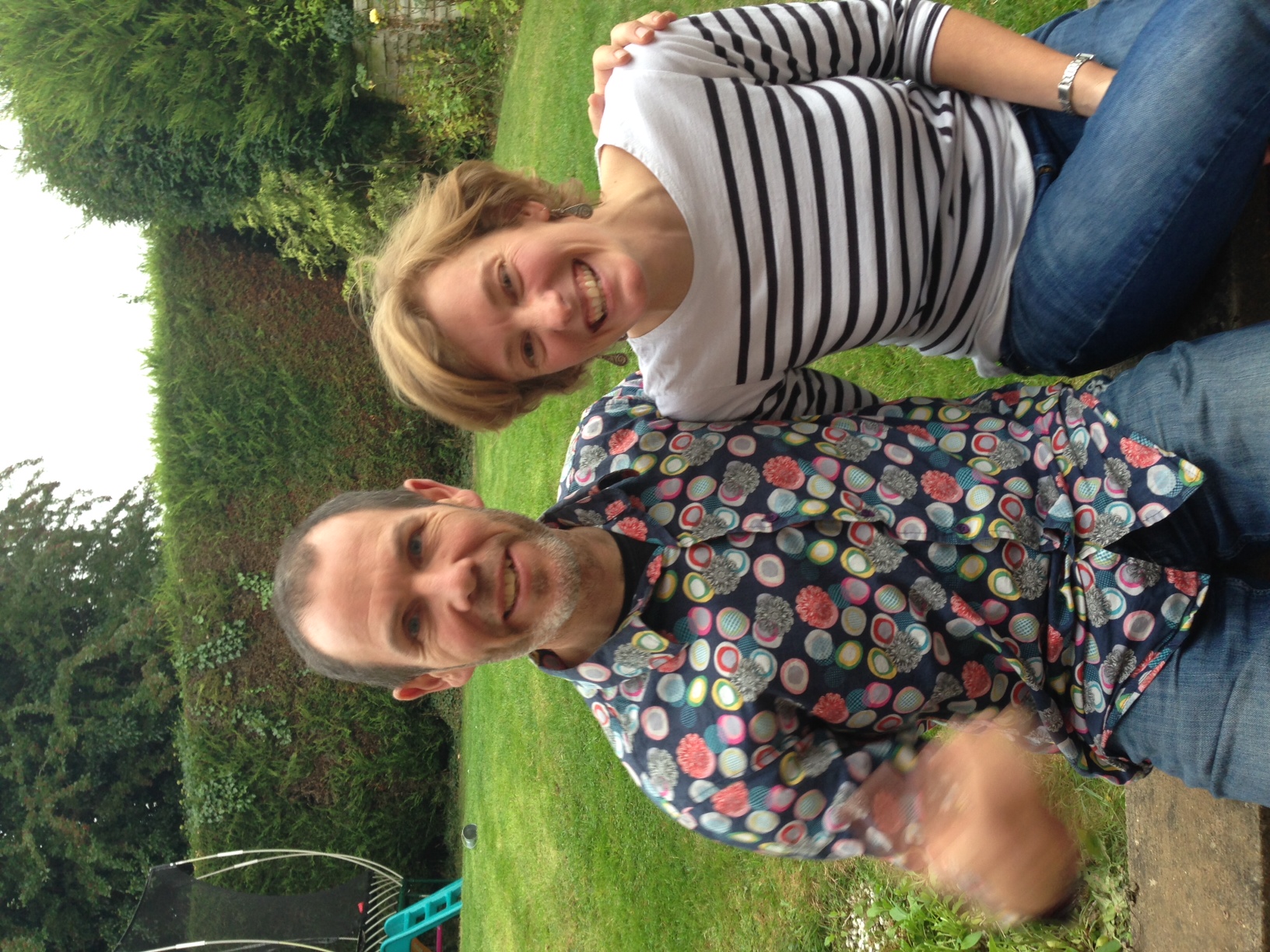
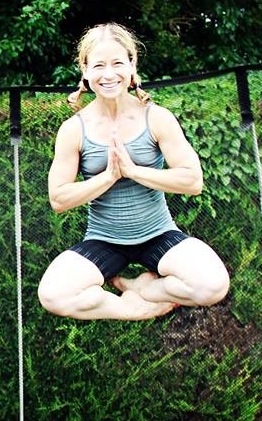
Norman and I.
Norman and I. His hand is less blurry in real life.

CW: How would you describe your teaching style?

NB: If someone’s really laid back in their everyday life, when it comes to their teaching, I wonder if they’re really up tight and like, “Do this! Do that!” Whereas in my normal life I’m quite focussed and impatient. I have the speedy London walk and I’m aware of the impact that’s had on my life.

As a result, when I’m teaching I’m all about taking it slowly, taking it easy. We have to let go of thinking, “I can’t do this…” or “I used to be able to do that…”

I encourage people approach their practice as “here I am right here in this body, right now as it actually is.”

Someone said to me that it’s about being firm but fair and I want to help people find their potential by using skillful effort. In western culture it’s all about striving for the goal and we push ourselves too hard. And there’s always more goals. Where does it end? We need to be gentle with ourselves whilst also applying a bit of a push.

We also need to be conscious of how each day is different. Some days we might need more of a push and, on others, we might just need to put our feet up on the sofa. It’s accepting that that’s ok. We have to just do what feel right with a level of skillful inquiry.

I like to think of myself as a conduit for helping people to find their potential.

Of course I still have lots to learn. I know I find it hard letting go of people. Sometimes people don’t come back to classes and sometimes I have to suggest to students that they need to go to another teacher.

For example, I’m half way through the second series and, being realistic, I’m probably not going to get much further. If there are students who are going beyond that, I can’t teach them asanas that I don’t practice myself. I’ve suggested before now that students go to Hamish Hendry. It’s hard but it’s right for them and I have to let go.

CW: How do you bring the practice of yoga into your everyday life?

NB: I feel that the word ‘yoga’ comes with baggage. I’m quite influenced by Michael Stone and he prefers to call it ‘intimacy’. Matthew Remski calls it ‘evolutionary movement’.

When someone’s doing a dance class, they can be far less striving and goal orientated than someone doing a yoga class. It’s about what we bring to the situation. It’s about working on ourselves and transformation.

We all live in this world but I feel we have to be conscious of the choices we make. I fly, for example. But I do believe in social transformation and the more aware we become of our inner landscape, the more conscious we can become about other people.

There was a book written about a Buddhist nun called Tenzin Palmo:  ‘A Cave in the Snow’ and she talked about how great it would be if when we meet people on the street, our first thought were: “may they be happy and well”. Not judging them on the way they look, or the clothes they’re wearing. Not thinking “I don’t like you” or “you remind me of so and so”.
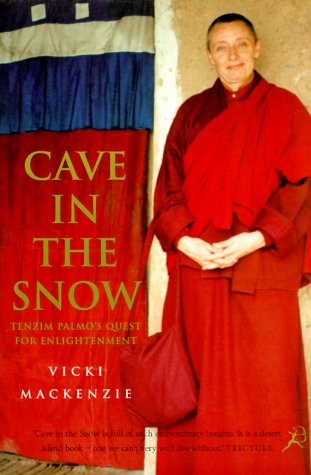
Cave in the Snow by Vicki MacKenzie

It’s these unconscious conversations in our head. Part of the practice is becoming aware of these conversations and just seeing people and things for their natural beauty.

I also enjoy the practice of eating in silence. You just eat with no distractions – no TV, books or music. The food actually tastes better! You’ll eat more slowly, you’ll eat less, and you’ll become more satisfied.

I’ve also been thinking recently about the sustainability of my physical practice.  Is your practice sustainable? If we’re going to strive and sweat and grunt and groan, it could be debatable. It’s ok when you’re 25 but I turned 50 this year and I approach my practice very differently to ten years ago.

I’ve learnt a lot. I do it less. I do ashtanga 3-4 times a week and I love it. But I want to be able to do it in ten or 20 years’ time. I want my practice to be sustainable.

This practice of working on ourselves will continue until our last breath.

CW: What’s the best thing about teaching yoga?

NB: I remember when I started teaching, someone said to me: “Don’t give up your day job”. I took this on board and I said I’d give it six months and see if I could manage financially and also to see if I’d enjoy it. Fortunately, it went well and I continued.

I’m always looking to evolve how I teach and learn more about teaching. Continuity and consistency of teacher is important. We can learn so much by putting our nose to the grindstone and spending time with a specific teacher. We can learn so much by staying with a situation – it’s like a relationship with a partner. If you decide to give up after three months, what do you learn?

I’ve been going to Hamish Hendry’s ashtanga classes for 14 years, I’ve spent 12 years practicing yin with Sarah Powers. I’ve learnt a lot by sticking with teachers.

CW: If you didn’t spend your weeks teaching yoga, how else do you think you’d spend your time?

NB: Before I taught yoga, I did a variety of different things. I worked for a local authority, I worked on a fruit and veg stall in Spitalfields market. I’m not sure how I’d spend my time but I know I wouldn’t be so happy.

But you know, you’ve got to make the most of this life. Life is so short and precious. With my alliteration hat on, I’d say that I just teach the preciousness of life, the precariousness of life, and the parasympathetic nervous system…

CW: What makes you happy?

NB: A good book. The taste of food. Bouncing on trampolines. Being in my kitchen. Standing on the top of Parliament Hill Fields looking over London. Standing on my head. Simple stuff.

CW: What are you up to over the next few months?

NB: I’m very excited about a teacher training I’m starting at my new studio in North London with Melanie Cooper. We teach day workshops together and a few months ago we were doing one and everyone was lying in savasana and we thought that we could do it as a teacher training.

We work well together and it’s a nice balance – Melanie’s got a lot of experience teaching ashtanga and has run teacher trainings before. I’ve taught people how to teach yin on five-day intensives and yin is definitely needed in today’s world.

I also run supervision groups for yoga teachers. All psychotherapists have to go for supervision after qualifying and it’s the same with acupuncturists and other professions. It’s totally accepted.

But in yoga teaching, you do your training and then you’re set adrift. When I first started teaching, it would have been great to meet together with other teachers and share stuff.

Each group is closed and runs for six meetings over six months – no one new can join once it’s started, it’s confidential so we can express fears and dreams and the day-to-day difficulties and joys of teaching yoga. Also it’s a place we can bring up any issues with students. I think it’s a really important thing to get going. The first session is an introduction on Sunday 1 December where you can come along and have a chat and see if you’re interested.

The next yin intensive is 20-24 March 2014 and I’ve got various classes and workshops on the horizon too. So yeah, life rolls on…

CW: Thank you Norman.

NB: Thank you Clare.


If you’d like to find out more about Norman and his teaching, visit www.yogawithnorman.co.uk. I’m going to his next yin workshop in London Bridge on Saturday 30 November so I might see you there.

There’s more about my Hertfordshire and London yin classes and workshops on this website.

Norman Blair seated forward bend in a field
Norman in a field

You can do it! Keeping up that home practice…

With winter in the UK closing in and the early mornings becoming darker and colder, snuggling under your duvet is likely to feel increasingly appealing. But how do you stay connected to your home practice?

I’ve heard people say that the hardest step to practicing on your own at home is rolling out your mat. But once you’re standing on that mat, you’re half way there.

I’ve asked some teachers for their tips to help you stay motivated through the winter months…

Norman Blair, yin and ashtanga teacher

Norman (image from indabayoga.com)

One of my favourite sayings is: A little a lot is better than a lot a little. Make it accessible. You could just sit for five minutes. Go with the morning. When does the evening start? When you get in from work? After dinner? Before bed? The morning is better.


If you can’t work out how to fit it in, just get up five or ten minutes earlier. It’s not rocket science. We can be so disciplined in reading the paper, watching the latest boxset…


People forget that Rome wasn’t built in a day. It takes time. We have to be realistic about what we can do and we just have to do our best. Be less ambitious.


Get support. It’s great to have a home practice but a sense of community is important. In Buddhism it’s called ‘sangha’. The support that we require in these hard and difficult times isn’t unique to now – they were difficult in the times of Buddha too. But we need support. We need sangha.

Norman has been practicing yoga for more than 15 years and teaching since 2001. If you’ve enjoyed reading this, I’ll be interviewing him for the blog very soon – sign up on the right to make sure you don’t miss it.

Cathy Haworth, ashtanga teacher

Cathy (image from bayogastudio.co.uk)

Dedicate a specific time each day to practice which is realistic and manageable.


Let go of the idea that you need to do a full primary series practice. In an ideal world this is great, but with the many pressures we often put ourselves under, this is not always possible. Be happy to start with ten minutes and let the universe decide if you are able to do more.


Remember what you feel like when you finish your practice and reconnect to that feeling if you are struggling to get on your mat. Have you ever regretted getting on your mat? I know I haven’t.


Aim to get to a certain posture in your practice each time you start. This may be the sun salutations, standing, or maybe navasana. When you reach that posture, see if you feel like doing more. If not, be very happy that you have achieved your goal. Don’t forget to allow time for your relaxation at the end.


Avoid beating yourself up if, at the end of your day, you didn’t manage to get on your mat. Trust me, it doesn’t help! Look to smile inwardly as you progress through your practice, trust it, and enjoy it.

Cathy runs BAYoga Studio in Berkhamsted, Herts. Her favourite class to teach is a Mysore self practice and can’t wait to visit the place itself in India next year.

Adele Cassidy, Anusara and pregnancy yoga teacher

Adele (image from yogagivesback.org)
Adele (image thanks to juleeyoga.com)

When it comes to starting a home practice or keeping one going my best advice is to find something to motivate you and let that motivation be fluid.


BKS Iyengar says that practice “waxes and wanes like the moon”. Some days I spend several hours luxuriating on my mat with my books and pen to hand. Other days it’s all I can do to stick my legs up the wall in vipariti karani. It took me about three years to be ok with that.


I’m pretty sure that since you’re reading this blog something’s motivating you, but in case you’re stuck here’s my top list:


1. I’m going to a workshop/training/retreat I better get a bit fitter

2. I’ve been on a workshop/training/retreat and I’m pumped with enthusiasm

3. No reason, I just gotta do it

4. I really don’t want to do this today but I’m going to anyway

5. I am going to nail that pose


Christina Sell would say that every second you put into practice is a deposit in the bank. If you see someone striking a perfect pose and the words “I could never do that” enter your thoughts, the truth is that for the majority of us, we’re not born like that. What you don’t see are the hours, blood, sweat and tears which went into that asana.

Adele describes herself as a yoga teacher and spiritual adventurer. She’s very excited to be currently studying towards her 500 hour qualification with Chris Chavez. This requires regular trips to Istanbul. Can’t be bad.

So keep it up people! And do you have any advice? What keeps you motivated in your home practice? You can leave your comments below.


The joys of yin yoga: students’ perspectives

It’s all well and good me saying how great yin yoga is but I thought it would be nice to hear from others to find out what yin means to them. I spoke to a couple of regular students and here’s what they said:

Reclining backbend yin yoga pose
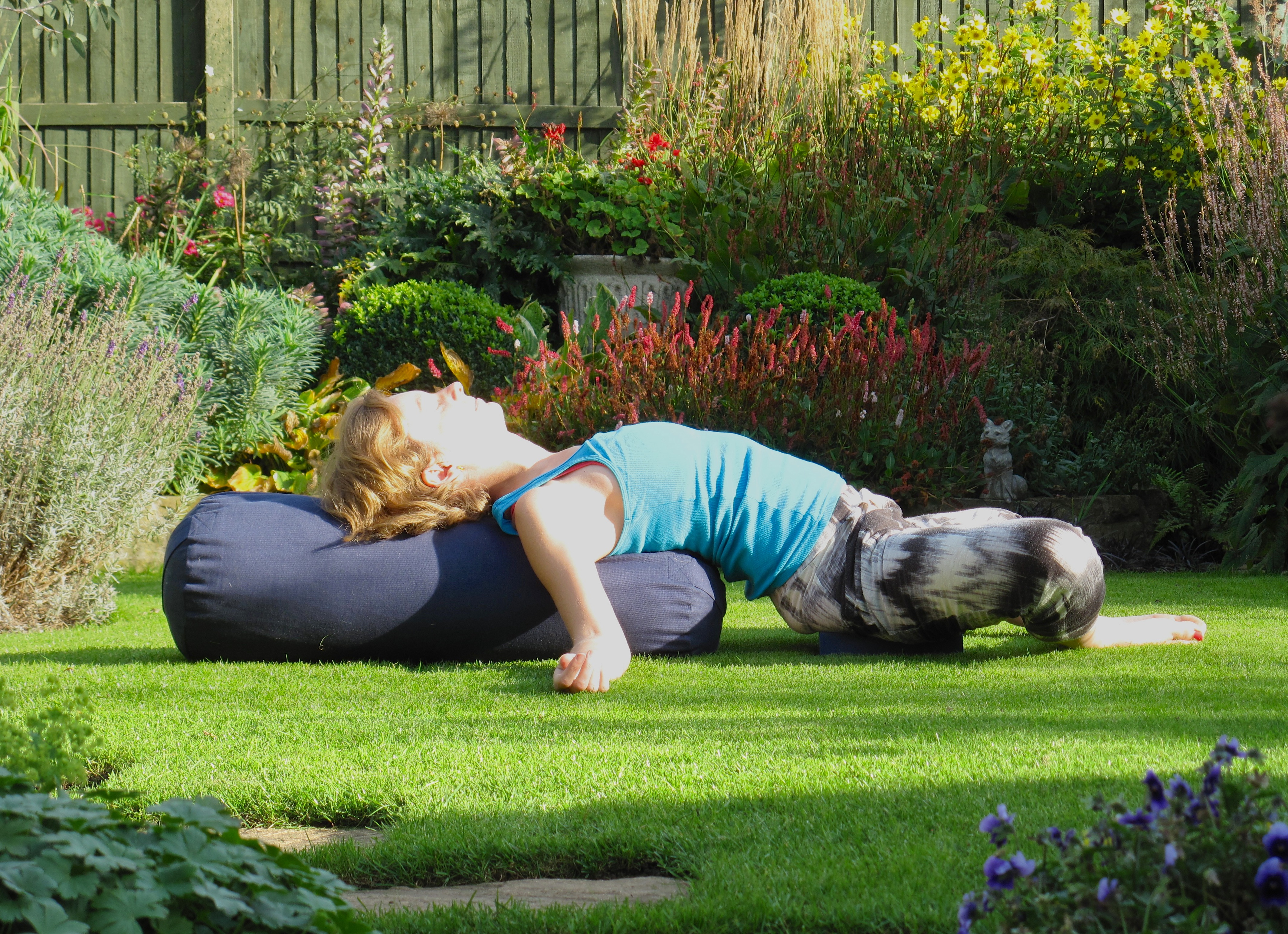
Louise’s favourite yin pose: gentle backbend and hip opener

How would you describe yin yoga to someone who’s never practiced it?

Natalie: Yin yoga is a deeply relaxing yet energising form of yoga that encourages you to really breathe into each pose. Poses are held for around five minutes or so and are mostly seated.

Janet: I would say that it’s relaxing and calming. It realigns your body and soothes your mind. We hold poses for five minutes at a time and you only do what is good for your own body.

Louise: I wasn’t excited ahead of my first yin experience. I love ashtanga and I thought yin sounded a bit dull and easy. Not my sort of thing. I quickly realised why everyone goes on about yin being the perfect complement to ashtanga. And it’s definitely NOT easy. Or dull. I find it challenging yet peaceful. Stretching yet relaxing.

Natalie's favourite yin pose: Butterfly - forward bend, hip opener
Natalie’s favourite yin pose: Butterfly – forward bend, hip opener

Why do you enjoy practicing yin? 

Janet: I’ve got sciatica and I know it helps my back. I feel the benefit throughout the whole week! It helps me to feel relaxed, stretched and soothed.

Louise: I generally struggle to clear my mind and relax. Thoughts and tasks always creep in but yin seems to give me an opportunity to really let go and just be.

Natalie: Firstly I love it as a ‘balancer’ to ashtanga yoga. It is wholly complimentary yet completely different in approach and focus. I feel that with this style of yoga I really begin to understand the enabling power of breathing. I am naturally very ambitious and competitive and find yin makes me stop and reflect on why I am doing yoga in the first place.

After a yin session I feel balanced, relaxed and energised. I find it clears my head and helps me focus. I sleep well afterwards and feel less ‘crunched up’ in my posture.

Favourite yin pose? 

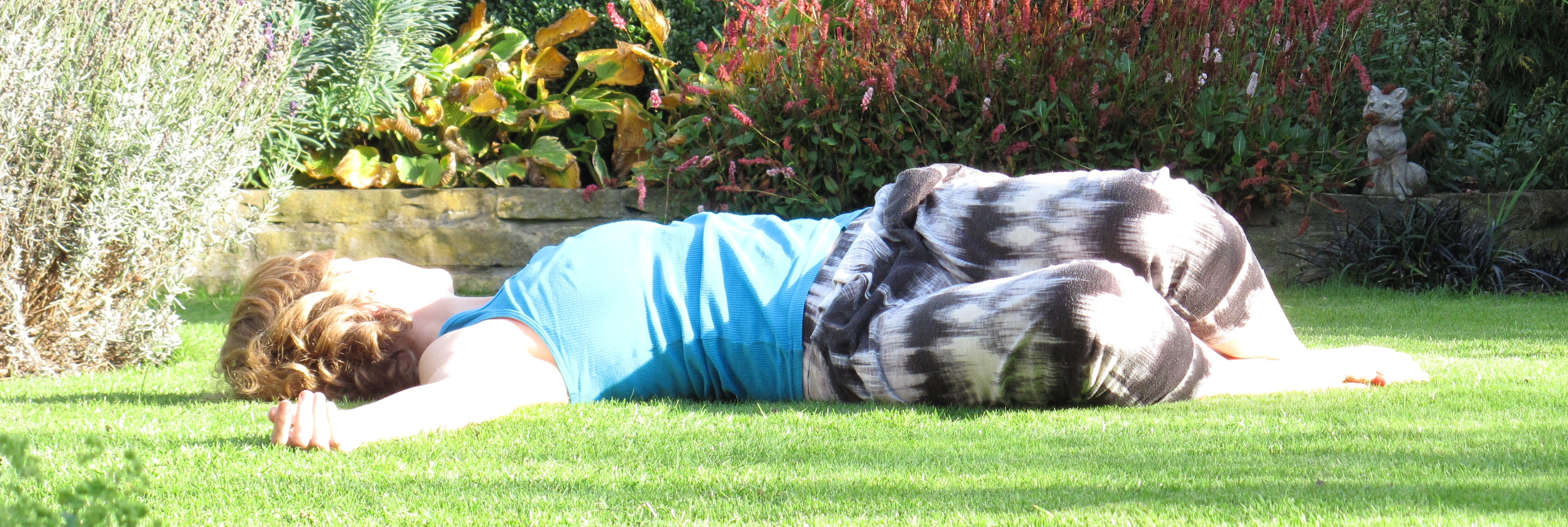
Janet: I’d have to say particularly the twists as they help my back.

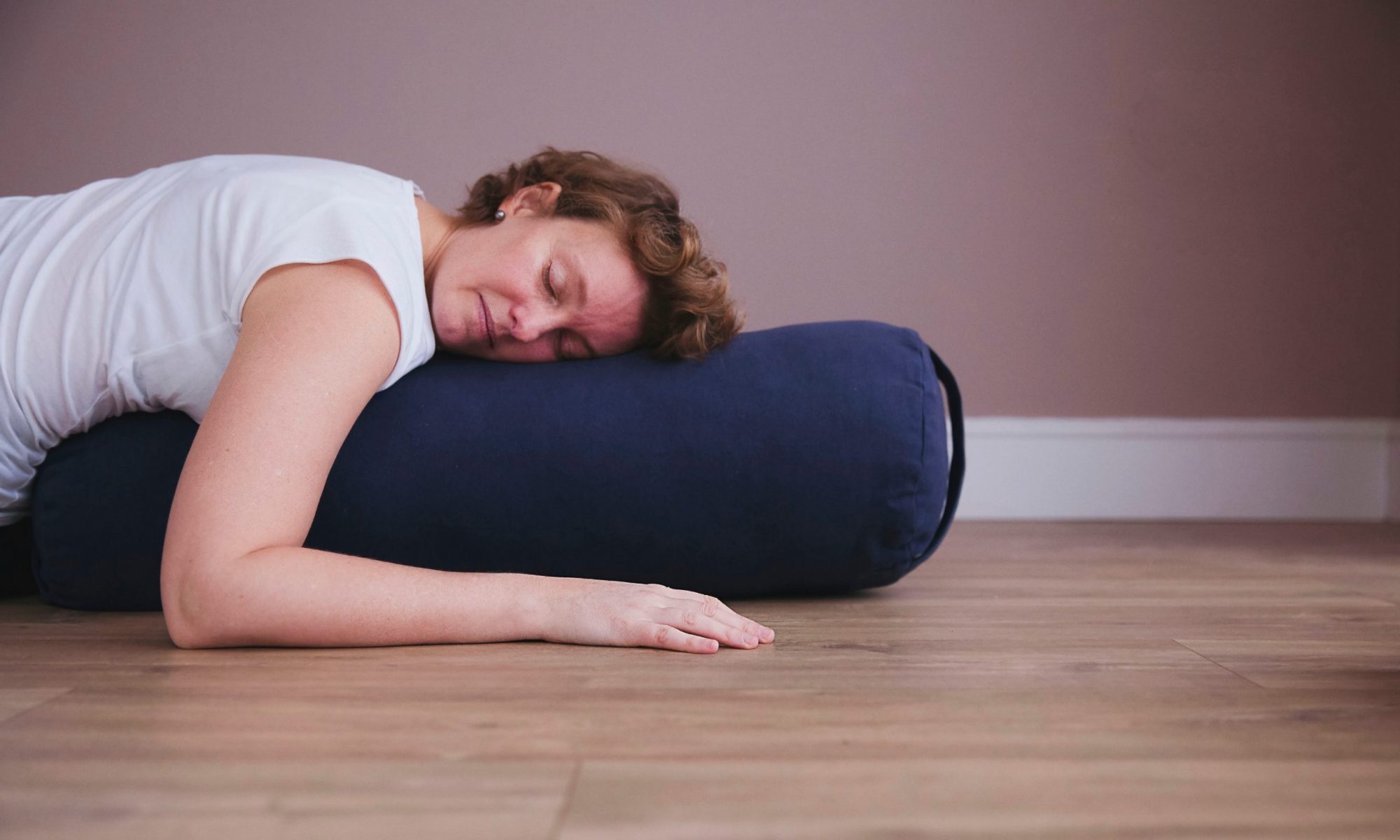
Louise: When you sit on a block and then lie back over a bolster. A kind of active bliss!

Natalie: Seated, with legs over the bolster, leaning forward towards my shins. I find it invigorating and can see a real difference in terms of how much my body opens over the five minutes.

Have you practiced yin? Why do you enjoy it? Do you have a favourite pose? Feel free to comment below.

If you’d like to try yin or continue your practice:

  • I’m starting a weekly yin class at The Yoga Hall in St Albans from Thursday 17 October.
  • April and I are next teaching a yin/ashtanga workshop in Harpenden on Saturday 19 October.

    Yin pose: spinal twist
    Janet’s favourite yin pose: spinal twist

For the love of art

I have spent the last few weeks under an unprecedented amount of stress. I appreciate that that’s not an opening statement you expect to find on a yoga blog but it’s the truth. The reason being that I’m working on the marketing for a new London art fair taking place next month.

Having difficult conversations and cursing to the heavens has unfortunately become the norm and I wake up at 2am composing emails in my head. My brain is full of artwork deadlines, red-flagged emails and often the computer says no.

Deva Premal’s soothing chants are permanently on repeat on iTunes and I’m having to run my fingers over my forehead to release my furrowed brow. After sitting hunched over my laptop day after day I can feel my right shoulder inching up towards my right ear after hours of mouse-clenching.

Does any of this sound familiar?

I look at myself and it makes me think about why I started doing yoga: to cope with a stressful job in London.

My sister reminded me that it was only a few months ago when she was in a similar situation and I was spouting yogic pearls of wisdom about letting go, not being so attached to the results and offering tips on dealing with perfectionist tendencies.

It’s so much easier to give advice than listen to it yourself.

The other day in a yoga class I mentioned that, as well as teaching, I did freelance marketing work. “Oh I can’t imagine you doing that” said a regular student.

But teaching yoga is just one part of me. Ok, it’s a big part of me, but just because I calmly tell people to “inhale deeply” and “feel yourself sinking deeper into the mat” doesn’t mean that I have all the answers.

Us ‘teachers’ may be just as likely to have our feathers ruffled. We’re certainly not all perfect.
Perhaps it’s just that we have awareness to know that getting on our mats or repeating our mantra can help try and deal with stress and banish these negative thoughts and emotions. And you don’t have to teach yoga to figure that one out.
Fortunately this art fair will be over in a few weeks and I can return to spending my days wafting about on a cloud of omms and namastaying people in the Post Office.
It’s certainly hammering home the point that I am very much still a student.
How do you deal with stress? Any tips?

Why is there so much ashtanga yoga in Harpenden? My highly scientific theory.

Harpenden sign
Image thanks to thegroveharpenden.co.uk

I was having a chat not too long ago with a local yogi and we were discussing the popularity of ashtanga where we live in Harpenden, Hertfordshire. It appears to me that in terms of yoga styles taught and offered around here, ashtanga is king.

It got me thinking why that might be. And surprise, surprise, I have a theory. Now bear with me while I give out-of-towners some context.

Harpenden is about 30 minutes by train from London. The line snakes through the heart of the capital, making stops at places like City Thameslink, Farringdon and Blackfriars. These are all areas where the big city bucks are made – they span the financial district and hotspots for law firms.

And by looking at the cars in Harpenden station car park, it’s pretty fair to say that that’s where a lot of these commuters are heading. They work hard, achieve results and can afford to live in Harpenden as a result.

“So what’s this got to do with yoga?” I hear you ask. Well, I went to a led ashtanga class recently and I heard a student say that they’d only get off the sofa in the evening if they felt like they were going to build up a sweat in class. To some, it’s viewed as an alternative to going to the gym.

It’s the ‘pushing’ and ‘striving to achieve’ that can draw some people to ashtanga. I guess you do need some steely determination to get through the physically demanding asanas that comprise the Primary Series.

I’ve heard ashtanga described as a “gymnastic routine” but that undermines its beauty. When you practice ashtanga traditionally in a Mysore-style class, everyone goes at their own pace, in time with their breath. The room is quiet except for the sound of ujjayi breathing and the teacher gives you individual attention, tailored to where you are in the practice. It becomes a moving meditation.

And yin yoga really is a perfect practice for Harpenden. If we lead stressful, hectic lives, your yoga practice provides a time to slow down, to surrender and let go of ambition. If we’re constantly striving and rushing from one thing – or one pose – to another, we’ll burn out.

By spending prolonged periods in each yin pose, we let go of ambition. We come to a point of stillness – both mentally and physically – and we learn to accept our bodies. We also observe sensations that arise in our bodies, knowing full well that if we push ourselves, we aren’t half going to feel it after five minutes. There’s no hiding in yin. You’re in it and it’s for the long haul.

So if you practice ashtanga you should probably try yin yoga. It’s about achieving balance. The yin and the yang.

Of course, you might disagree with my vast sweeping generalisations of this Home Counties town. In which case, feel free to leave a comment below.

Alternatively, you could come to an upcoming workshop and take it up with me personally…

Yin yoga workshop at BAYoga Studio, Berkhamsted: Saturday 14 September

Yin/Yang yoga workshop at Breathing Space in Harpenden (Yes! Get off the sofa!): Saturday 21 September

Weekly yin classes in Southdown, Harpenden: Tuesdays, 8-9.15pm


And if you’ve read this far, Congratulations. Here’s a little treat: How to practice yoga with your cat

Teacher interview: April Nunes Tucker

As part of my Teacher Interview series on the blog, I bring you Dr April Nunes Tucker. 

April and I teach workshops together and her main practice is Ashtanga yoga. Originally from California, she’s been teaching for almost 20 years and her classes are challenging yet fun. I talk to her about the interesting journey that’s brought her to Hertfordshire. 

CW: Hello April. There aren’t many people in this neck of the woods that can say they’ve spent four years living in a yoga community. How come you made that decision?

April Nunes Tucker
Dr April flying high. Image courtesy of Carli Spokes.

ANT: It was 1994 and at that time I’d just finished my first degree in dance. I was working as a waitress in Southern California and a lovely lady at work suggested that I go visit the Mount Madonna Center (MMC) in the mountains in Northern California.

I arrived late afternoon, walked around, had dinner and pitched my little tent surrounded by 355 acres of beautiful redwoods. I felt so fearful of the place that when the sun rose the next morning I packed up and drove away.

That week I was bothered by how I couldn’t quite put my finger on what had frightened me about the place. In an effort to face my fear, I went back.

I was only there a few minutes when a woman stopped me and asked, “would you like to meet with Babaji? He’s just had a cancellation.”

‘Babaji’ is what devotees call Baba Hari Dass. That was my first meeting with the very important man who gave me the tools to better my life through yoga.

Our meeting was surreal. He’s a silent monk who hasn’t spoken for almost 60 years but I felt as though he could read my thoughts. He asked what I did, what I planned to do, and when I told him that I wasn’t sure, he wrote on his chalkboard, “you could live here.”

It took me less than a month to pack up and move to MMC and I didn’t leave for four years.

CW: How would you describe the Mount Madonna Center?

ANT: Baba Hari Dass is the guru and he teaches classical Ashtanga yoga with an emphasis on meditation. This is different to how we practice Ashtanga vinyasa yoga in the West.

The ultimate purpose of practicing yoga is to develop concentration in order to achieve peace.  The classical Ashtanga yoga system consists of eight parts:

  1. The first of these is the ‘yamas’ – a Sanskrit word meaning ‘restraints’ – living your life in a non-violent way, being truthful, not stealing, continence and non-hoarding.
  2. There’s also the ‘niyamas’ or observances –  having a sense of purity, being satisfied with what you have, undertaking spiritual study and recognising our limited ego-self.
  3. Doing the physical postures or ‘asanas’. These traditionally belong to the system of Hatha Yoga.
  4. Practicing pranayama exercises – breath control.
  5. Observing what’s going on inside, instead of outside (pratyahara)
  6. Developing concentration (dharana)
  7. Meditating (dhyana)
  8. Superconsciousness (samadhi)

CW: What was daily life like there?

ANT: Busy! Wake up early, attempt to meditate, walk from my tent or cabin to the kitchen (my first year there I spent in a tent – cabins were at a premium!), help cook breakfast for anywhere between 100-500 people, take a break walking through the woods or practicing asana.

On certain days, attend a class with Babaji, work the rest of the afternoon on a building site or in the garden or scrubbing toilets, eat dinner, wash dishes, sit around chatting, drink herbal tea and then go to bed.

… And then do it all again the next day. It’s based on the idea of ‘karma yoga’ – doing things selflessly.

CW: Tell me about Baba Hari Dass

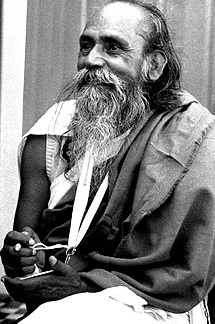
Baba Hari Dass
Baba Hari Dass. Image from http://www.mountmadonna.org

ANT: Babaji is an incredible human being and a wonderful teacher. He taught me how to be less afraid, concentrate and accept myself more.

One of his well known quotes is: “Work honestly, meditate everyday, meet people without fear and play” and this is what he teaches. I feel his vow of silence allows his teachings to come through with great clarity.

He has a lovely sense of humour, is compassionate and the most remarkable person I have ever met.

CW: Did you learn lessons that you carry with you in daily life?

ANT: I carry the sadhana practice that was given to me by Babaji. It includes chanting, hand mudras, pranayama, kriyas (methods for calming the mind) and meditation. I try and get up an hour before my kids every morning in order to do the practice. Sometimes it gets cut short when they start clambering over me but the intention’s there.

CW: You taught yoga classes there. Was this your first experience of yoga? What were the classes like?

ANT: I taught asana (the physical postures) and pranayama (breathing techniques). MMC hosts very big retreats – often with around 500 people – so my first teaching experiences were a baptism of fire!

I was on a stage with a sea of people in front of me and a two other ‘demonstrators’ on smaller platforms either side of the stage doing the same asana as I taught it. Scary!

My only previous experience of ‘yoga’ was doing a little class in the staff room of the restaurant where I worked in California with my waitress buddy who followed Babaji.

CW: What were the other people like who lived there with you?

ANT: There were all sorts of different people there. Some were only staying a month just checking out the scene, others were original devotees of Hari Dass since the 1970s. The people there were as varied as people are anywhere.

I will say that I believe living in a community setting magnifies personalities. It is very good training for looking at yourself when you are irritated with others.

CW: There are lots of spiritual/yoga communities in California. Why do you think that is?

ANT: Everyone is searching everywhere. Maybe I’m being generous but California has a lot of natural beauty and people are open to alternative ways of thinking or being. So Eastern philosophies such as yoga flourish.

Also I think many people who live in California are quite privileged and can ‘afford’ to take time out to work on personal development.

CW: You now teach Ashtanga vinyasa yoga – as popularised in the West by Sri K Pattabhi Jois. What do you think is the best thing about teaching yoga?

ANT: For me, teaching a class has three parts: before, during and after. Before the class I enjoy the discipline of attempting to put the reins on my ego. I try to come into class as open and humble as possible.

During class I try to keep my ego in check – demonstrating humbly, allowing for humour and executing compassionate adjustments as much as possible. I really like that sensation of ‘being in the zone’ where I can intuitively flow through a class.

Sometimes after classes I get a real hit of emotion – love or sadness or joy. I like this because it makes me feel very alive. It’s a direct reflection of our human connection.

CW: If you weren’t teaching yoga or looking after two small children what job would you be doing?

ANT: I would probably be lecturing in a university on contemporary dance. That’s always been my field of interest – particularly human movement and the way that it connects people and communicates meaning. I have a PhD in dance and have researched movement repetition.

I like how Ashtanga vinyasa yoga and my daily sadhana practice rely on repeating certain movements and this links nicely with my specialism in dance.

When I go back to the academic world I hope to continue finding ways for dancers and dance academics to become interested in yoga through my research.

CW: How does the Ashtanga vinyasa practice challenge you?

ANT: I feel that the key to the Ashtanga practice is the repetition. To offer an image, the repetition of the practice is like an anchor – the anchor for a boat out at sea.

Imagine a boat floating on the surface of the water with a big heavy chain with an anchor at the end. The anchor’s chain goes down… down through the water until the anchor embeds itself in the sand on the bottom of the ocean floor. That deep ocean floor is like that part of self that knows it’s all ok – the part of the self that knows peace. It is the repetitive yoga practice (the anchor) that can tap into that peaceful part of the self.

The boat represents the part of ourselves that we identify with most readily – the self that’s pulled this way and that by things we desire. It’s the part of the self which is affected by the weather, the currents of the water and the part that gets angry or sad as seagulls shit on it as they fly overhead.

Clare Wener and April Nunes Tucker
Discussing the intricacies of the Ashtanga Primary Series or just as likely: the songs of Dolly Parton. Thanks Carli Spokes for the image.

CW: Complete the sentence: A life without yoga would be….

ANT: Discombobulating.

CW: Thank you for your time April.

April can be found in Harpenden teaching a Sunday morning class at Roundwood School and private classes in people’s homes. She can also be found on Facebook and email. April and I teach yin/ashtanga workshops at Breathing Space in Harpenden and the next one is planned for Saturday 21 September from 3pm – 6.30pm. Visit the workshops page for more details and to book.

If you’re interested in learning more about yoga communities/ashrams, I’ve frequented some in India:

Have you spent time in yoga communities/ashrams? Or has reading this encouraged you to find out more about them? Feel free to comment below…


Even the Women’s Institute can’t stop the happiness of yoga

“Contentment comes from mental well-being that moves us to consider the positive in all beings and situations.”

This was the reading on which I decided to base this morning’s gentle yoga class in Wheathampstead. And how apt it proved to be.

I arrived early to the little Mead Hall in Wheathampstead village to find a hive of activity. Normally it’s silent but there were people inside arranging tables and making tea. I peered through the door, dragging in my bags of mats and props only to be told that it was a WI (Women’s Institute) meeting and they’d had the booking in the diary for months.

“Bugger!” I thought. Of course, it was only a matter of minutes before regulars started arriving for the class. I explained the situation and we stood in the car park debating the options. The park was ruled out as they didn’t want to be watched by dogwalkers… living rooms weren’t big enough… what to do?

My yogi mum volunteered her back garden and so it was decided. Directions were given and five minutes later we were at Amwell Lane and people were marvelling at the beautiful flowers and the lush green lawn.

“Oooh I daren’t walk on the grass, it’s so immaculate!” said Liz. The joys of having a dad who’s a landscape gardener. I’ve been saying for ages that they should open it to the public.

We progressed through the class. When we did our sun salutations, we really did stretch our fingers towards the sun, and when we ended our savasana, we brought our awareness to the sensation of every blade of grass touching our fingers and the backs of our hands.

It was a lovely class and here’s the full reading:

“Contentment comes from mental well-being that moves us to consider the positive in all beings and situations. Often our frustrations come from regrets, agitation, suffering or comparing ourselves with others. Focusing on what others have – or don’t have for that matter – instead of nourishing gratitude leads to everlasting discontent.

Contentment is a dynamic and constructive attitude that brings us to look at things in a new way. It calms the mind, bringing a flowering of subtle joy and inner serenity that are independent of all outside influences and perishable things.

It is very difficult however to sustain contentment. Though it may be easier to be happy when we are successful, only an exceptional soul remains positive in the midst of adverse currents. Contentment means looking at every event with a smile. It helps to have a sense of humour too.”

Bernard Bouchard defining 2.42 in the Yoga Sutras (Santosha)

We sat on the swing seat afterwards drinking herbal tea saying how special the class had been. People loved feeling the breeze and hearing bees buzzing around them.

And so I’d like to say a hearty thank you to the ladies of the WI. If they want to book the Mead Hall again on a Monday morning, please feel free. But just make sure it’s on a day when the sun is shining…

Yoga in the garden
The newest yoga venue in Wheathampstead

Teacher interview: Lila Conway

As part of a new series on the blog, I’ll be interviewing various yoga teachers – each with their own story to tell. The first of these is Lila Conway.

I first met Lila on my Sivananda teacher training in 2010. Having signed up for the month-long course in the Himalayas, I simply wanted to deepen my understanding and learn more about the practice. I had no plans to ‘be a yoga teacher’. In the final week, she sat us all down and said that it was our duty to share our new knowledge with people back home and teach. And the rest, as they say, is history.

Here she talks about her love of India, Sivananda yoga and teacher training.

CW: Tell me about your first experience of yoga.

Lila and I at the Sivananda ashram, Kerala

LC: In the early 90’s I was living a typically fast paced, hectic lifestyle working 24/7 in the London fashion industry. It was really demanding and competitive and I often used to feel physically ‘burnt out’.

It made me start questioning the meaning of life and I started searching how I could lead a more peaceful existence. I found ‘The Book of Yoga’ by Sivananda and started practicing at home. Although I found it a bit weird at first, I really began to feel a sense of peace after chanting mantras and practicing Tratak (candle gazing).

Soon after, I made the decision to leave my London life and take a year out travelling. Everything moved quickly from then on. I went to a yoga class in Thailand and was hooked… it was really my first deep experience of true connection, peace and healing.

CW: How do you bring the practice of yoga into your every day life?

LC: Yoga is a way of life, it’s not something we do only when we step on a yoga mat. And so I try to see everything as an offering – whether it’s preparing a meal, teaching a yoga class or gardening. We are divine consciousness itself and yoga is a means and a method to awaken to that realisation.

The moment I wake up I offer gratitude and repeat a mantra. I do the same before I go to sleep. My daily practice routine is that I start the day with a small Puja (devotional worship of deities) to connect to my spiritual teachers and God. I think it’s a beautiful way to begin each day – offering light, incense, flowers and water to the divine. I then sing some devotional mantras, do some breathing exercises, mantra meditation and yoga asanas.

The practices we do in yoga are varied according to the path you follow. Flexibility, peace of mind and improved health are all wonderful side effects of the practice. However, keeping the ultimate goal in mind keeps me motivated and committed to the practice.

Yoga is a process of awakening consciousness, removing the layers that obscure our inner divinity and ultimately returning to the eternal abode of love. Every small act we do helps in this process of evolution.

CW: Who or what inspires you?

LC: Wow, so many things inspire me! Nature, life in all its forms, seeing the transformation yoga brings to people. My students inspire me so much too. I’m also inspired by spiritual texts such as ‘The Bhagavad Gita’, the healing power of raw food, plants and herbal medicine.

I have such deep gratitude and inspiration for my first teachers – Swami Sivananda and Swami Vishnudevananda – for giving me a strong foundation in my spiritual life.

I also am inspired by various spiritual Masters and their service, humility and pure love: Bhaktivinoda Thakura for the poetry and beauty of the Bhakti yoga tradition, Amma for her message of love and service, and BKS Iyengar for being a living legend in Hatha Yoga.

The list really could go on and on!

CW: You’ve spent lots of time in India. What do you feel makes the country so special?

LC: It’s the land of the Rishis (sages), saints and yogis. The ancient texts of the Vedas were revealed to the Rishis in India. Lord Krishna, Buddha, Jesus and many incarnations of God have appeared in this sacred land.

The people of India teach me so much: patience, tolerance, acceptance, surrender, simplicity, devotion, faith, family values… so many qualities.

India has a wonderful way of magnifying my inner stuff and things I need to deal with in my life. Although not always comfortable at the time, it definitely helps to have an internal spring clean and I always feel better for it!

My greatest moments of inspiration often come in India. The place makes me feel alive and at home. I love the culture, food, language, temples, music, colours, smells (well… most of them), smiles, frustration and the joy that this magical country brings.

CW: How come you’ve spent so much time there?

Lila plays harmonium during satsang on a teacher training course
Lila plays the harmonium and chants during satsang on a Sivananda teacher training course

LC: I first went to India to study yoga and stayed in the Sivananda ashram in Kerala. I stayed so long my teachers advised me that the next step was doing a teacher training. I completed the course in 2001 and it was a huge journey and personal transformation.

It didn’t just ignite a spark but a raging fire!  I couldn’t walk away from this whole new world that had opened up to me so I stayed on as voluntary staff.  Three months became nearly eight years spread across both India and Canada.

Every year I was actively involved in many yoga teacher training programmes, including advanced teacher training courses. I would assist the main Hatha yoga teacher in all classes and demonstrated postures, adjusted students and taught a little. I was trained slowly and systematically over a period of seven years.

In 2007 I was given the authority to teach yoga teachers and taught my first course in Canada.  Although I left the ashram in 2008, I continued to return to India each year to teach on training courses at the Sivananda ashram in the Himalayas – where I met you! This year I am very happy to be back in India teaching my own teacher training course in Rishikesh.

CW: What do you enjoy about training people to teach yoga?

LC: Swami Vishnudevananda beautifully put together a month-long intensive yoga teacher training course unlike any other. It is an intense programme which is a systematic introduction and direct experience of the traditional yogic lifestyle and system of learning in the Gurukulam way (meaning teachers and students live together).

As the course is residential and the programme is from early morning until evening, we spend the full month working with the students and supporting them. I feel very blessed to be part of this journey in people’s lives and I do my very best to represent my Guru and his teachings. It’s a wonderful exchange of energies.

I feel alive and challenged and even though I have been teaching for many years, I always learn so much every time. We go through the highs and lows together and by the end of the course students are always positive, inspired, shining and full of energy. It’s so good to see and it really inspires me seeing the effort, commitment and heart that each teacher trainee puts into their practice and the course.

CW: What qualities do you feel make someone a good yoga teacher?

LC: The highest quality is humility. When a yoga teacher is humble, they remain open for the divine energy to flow. A yoga teacher is a channel for the ancient teachings and always has the student’s best interests at heart and never teaching to impress or for name and fame.

A good yoga teacher always remains a student and shares from direct experience and a proper understanding of the spiritual teachings and discipline of this beautiful science.

CW: What’s in store for you over the next few months?

LC: Excitingly, I am in the process of writing a new manual for our next teacher training course in Rishikesh in October.  I am also busy in communications with Swami Guruprasad in India – we are running the course together.

We are also working on some short videos of Swamiji so students can get an early peek of his wonderful words of wisdom.

My Bhakti Yoga teacher from India is coming soon so I will be fully immersed in his teachings for a week. This will give me a huge boost of inspiration ready for our August weekend yoga retreat near Bath, ‘The Heart of Yoga’ for which I am preparing some beautiful heart opening practices and have some amazing friends also coming to give talks, kirtan, delicious food, massage and more!

I’m also getting ready for a new term with Yoga Prema in Bristol. And then before I know it I will be on a flight to India for the October yoga teacher training course!

CW: Thanks Lila. Good luck with it all!

To learn more about the Rishikesh teacher training course Lila talks about, visit the Yoga Prema website.

Find out about my time helping out at the Sivananda ashram in Kerala last year.

Lila mentions Amma. Also known as ‘the hugging mother’, I visited her ashram. Read a post about the experience.

Funny bones and happy babies: Acceptance

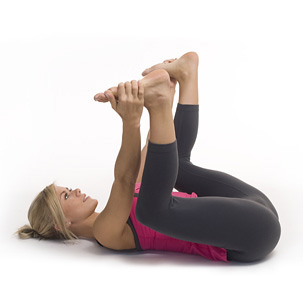
Last weekend I taught a yin workshop at BAYoga Studio in Berkhamsted. We did happy baby pose and I suggested to students that they took hold of the inside of the soles of their feet, allowing their knees to relax towards their armpits.

Happy baby pose
Happy baby pose. Image courtesy of truestar.com

Afterwards, a friend in the class mentioned that it feels much better for her to take hold of the outsides of her feet. Holding the insides made her shoulders and chest feel restricted. “That’s odd”, I thought. Trying it at home, my shoulders and chest felt open, no problem. And then I thought about my hips. I have very open hips so my knees are wide enough apart to allow for my shoulders to relax in the space between my knees. Her hips aren’t quite as open as mine and so by holding the outsides of her feet,  her chest broadens and she feels the benefits of the pose.

This got me thinking about different people’s bodies and how we approach poses. Not too long ago, someone asked me whether I could get my heels down to the mat in down facing dog. I said yes and they looked amazed. But is that due to having super stretchy hamstrings or just because of the way I’m built?

Perhaps my hamstrings have lengthened somewhat through practice, but getting my heels to the floor has never been hard. It’s surely got more to do with the fact that that I have a wide range of movement in my ankle joint due to the shape of my bones.
Likewise, I’m restricted in movement in my wrists. When I stretch my hand backwards, it hardly comes back. So when I try to do handstands, I need to place the edge of a cushion or a wedge between the heel of my hand and the floor to lessen the angle and pressure on my wrists.

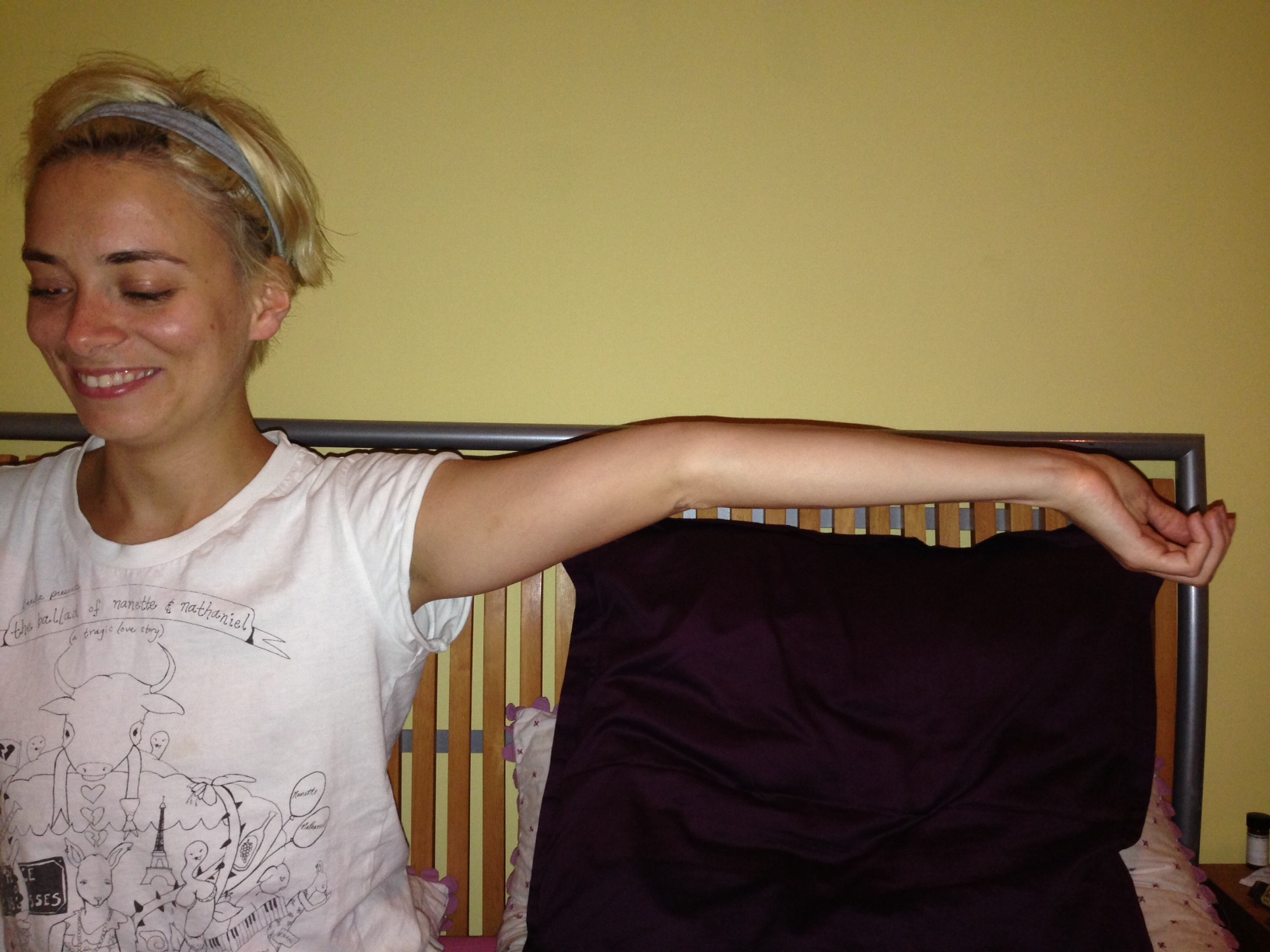
The elbow of Katharine Wener

Take my sister’s elbows as another example. She hyperextends through her elbows meaning that when she stretches her arm out, palm facing up, her elbows bends beyond 180 degrees. There’s no pain, it’s just how she’s made. When she practices yoga, some of her poses might look a bit odd. Ok, so she may never make it into a book of beautiful yoga poses (sorry Katharine, I still love you), but it works for her.

It’s just how we’re built and we need to work with the body and bone shape we’ve been given. We might feel a need to strive to create the ‘perfect’ pose, but for many of us, our bodies can’t do certain things because of ‘compression’ i.e. the range of movement we can achieve due to the shape of our bones and also how they meet at joints.

Regardless of how many hours of practice we put in, we can’t change this. It doesn’t mean that her pose is ‘better’ than yours, it’s just different and yoga teaches you about gratitude and acceptance: accepting where you are in your practice and more broadly who you are as a person.

If this sort of thing interests you, check out Paul Grilley. He talks a lot about anatomy. His DVD ‘Anatomy for Yoga’ is rather good too.

Singing vs chanting in the wilds of Hertfordshire

Having moved to a new area, I thought I’d put myself out there and try and meet some new people. “Hmmm…. how?” I thought. Well, I’ve been going to a few yoga classes locally but I wanted to meet MORE people. MORE I tell you!

And what do I like doing apart from yoga? Well, I don’t mind singing and I have been known – just on one or two occasions – to spontaneously burst into song when someone says something that reminds me of a song title. And I am rather fond of chanting Sanskrit mantras but that can be rather niche…

“And where did this lead me?” I hear you say. Well, it naturally led me to a taster Rock Choir session in Harpenden. Cue about 60 people – mostly women of  various ages (I was probably at the younger end of the spectrum) – sitting in a school hall on a Monday evening.

I sat with the altos and tried to get my head round where to breathe in Adele’s ‘Someone Like You’. Together we didn’t sound half bad.

Then came ELO’s Mr Blue Sky. I was relieved to hear that they’d been working on it for weeks as I hadn’t the foggiest what was going on. And there were dance moves. Fingers were clicked, salsa steps were attempted, arms were waved and my voice went all over the place. To think that my mum’s a soprano soloist. It was frankly embarrassing.

Abbi the choir leader was amazing. Enthusiastic, pulling everyone together, and incredibly talented. Some people were born performers, strutting their stuff and enunciating like it was going out of fashion. But something was missing. Even if we’d been singing the songs of Julie Andrews, I’m not sure if it was me.

I came home and thought about it. It all felt a bit empty. I love kirtan and chanting mantras. When I chant, I feel like I’m giving my all. My heart feels open and there’s no need to perform. It doesn’t even matter that you might not know the meaning of all the words in Sanskrit. There’s just a great energy about them. When I lead a chant, it’s a magical feeling when an entire room says the line back to you. I love it. Singing ELO and sashaying about just didn’t quite do it for me.

Anyway, you’ve got to try these things. If you fancy Rock Choir, there’s loads of them all over the country. If you fancy spending your Saturday night chanting Sanskrit mantras, the next one at the Yoga Hall in St Albans is 22 June. I know where you’re more likely to find me.

Oh and if you’d like to come to my yoga classes in Wheathampstead and Harpenden, details are on the class schedule page of my new (yes, I said ‘new’) website!